中文
中文
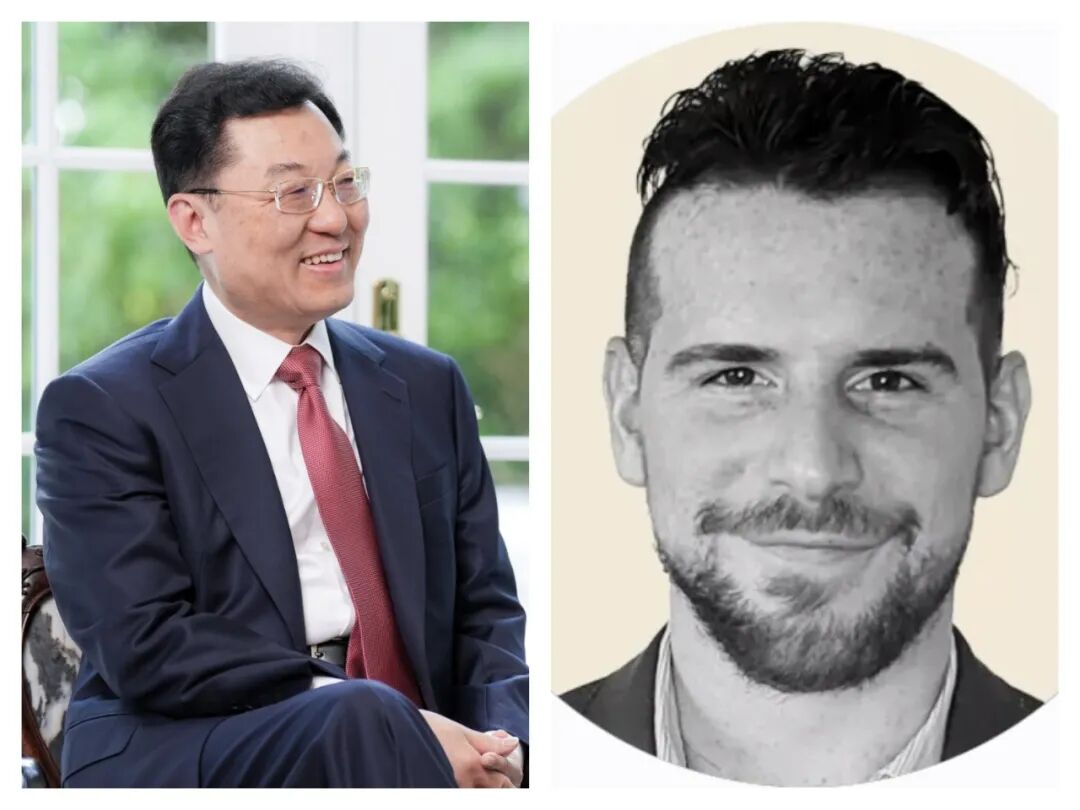
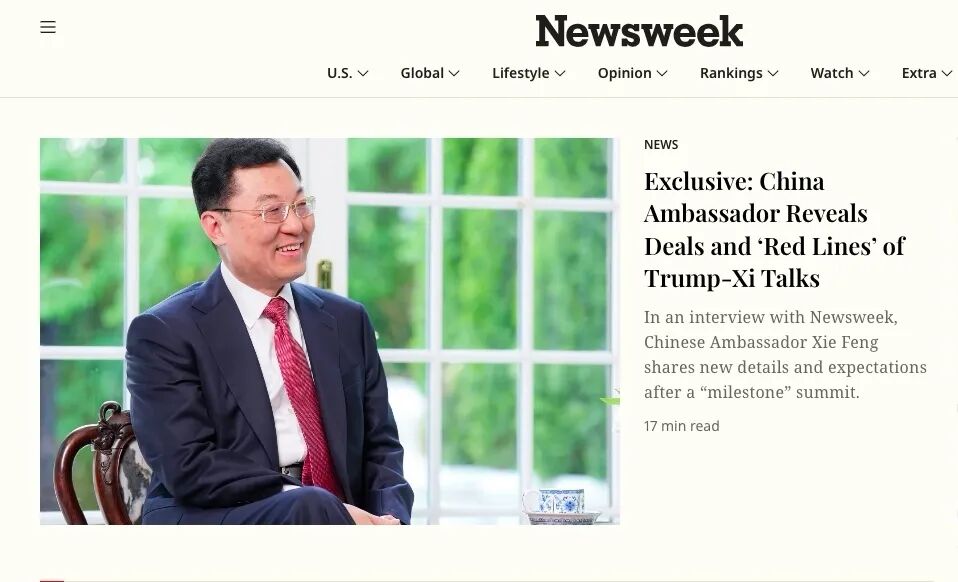
On September 29, 2026, Chinese Ambassador to the United States Xie Feng gave an exclusive interview to Senior Foreign Policy Writer Tom O’Connor from Newsweek on President Xi Jinping’s state visit to the United States and China-U.S. relations. The full transcript was published on the Newsweek website on October 1.
Tom O’Connor asked: The visit was undoubtedly conducted to the highest standard. Meanwhile, what new substantive outcomes or deliverables were achieved? We have noted that one of the outcomes in the Chinese side’s official readout is about Iran. Could you further elaborate on China’s position on the issue?
Ambassador Xie noted that the visit attracted global attention and had far-reaching influence. The key deliverables and understandings reached are reflected in the following five aspects:
First, the visit has opened a new chapter in heads-of-state diplomacy. During the visit, the two Presidents agreed to support each other in successfully hosting the APEC Economic Leaders’ Meeting and the G20 Summit. They also intend to attend each other’s meetings. This will sustain the momentum of close interactions between the two leaders.
Second, the visit has provided new guidance for China-U.S. relations. The two Presidents added more substance to the characterization of bilateral relations, and agreed to build “a constructive China-U.S. relationship of strategic stability on the basis of respect, fairness, and reciprocity.” This has provided clearer strategic guidance for the improvement and development of China-U.S. relations, marking an important step toward overcoming the “Thucydides Trap” and finding the right path to get along.
Third, the visit has opened up new avenues for mutually beneficial cooperation. The two sides achieved practical outcomes in economic and trade cooperation, including agreeing to extend tariff suspension, and reaching an arrangement for a US$30 billion reciprocal tariff reduction. The two Presidents tasked the law enforcement agencies of the two countries with continuing to strengthen cooperation and jointly combat transnational crime. China has scheduled and tightened export controls on more precursor chemicals. The two militaries also agreed to conclude a memorandum of understanding on crisis communication and prevention as soon as possible, and continue their cooperation to search for the remains of missing U.S. servicemembers in China. The list of cooperation in various areas keeps expanding, and the network of dialogue at all levels continues to grow and deepen.
Fourth, the visit has built new bridges for interactions between our two peoples. President Xi Jinping announced a series of new measures, including inviting 100,000 young Americans to visit China for exchanges and study in the coming five years, and leasing two giant pandas, Ping Ping and Fu Shuang, to Zoo Atlanta, which were warmly welcomed by President Trump. These will further cement the bonds of friendship between the Chinese and American peoples.
Fifth, the visit has demonstrated both sides’ renewed commitment to world peace. This year marks the 80th anniversary of the opening of the Tokyo Trials. The two Presidents recalled that China and the U.S. were allies in World War II and fought side by side to win the war, and agreed to jointly safeguard the victorious outcomes of the war. The two Presidents also had an in-depth exchange of views on artificial intelligence, as well as major international and regional issues including the situation in the Middle East, the Ukraine crisis, and the Korean Peninsula, agreeing to strengthen coordination to make due contributions to world peace and development.
As a responsible major country, China has always held an objective and just position on the situation in Iran. We are committed to facilitating the end of fighting, promoting peace, and helping cool down the situation. We do not believe maximum pressure would bring peace, and oppose unilateral sanction or “long-arm jurisdiction.” President Xi Jinping put forward a four-point proposal on promoting peace and stability in the Middle East, and also a four-point proposal on building a new security architecture in the Middle East. During the visit, President Xi emphasized that the sovereignty and security of all countries should be respected, encouraged relevant parties to stay committed to peace, and supported the U.S. and Iran in returning to the Islamabad Memorandum of Understanding, resuming dialogue and negotiations at an early date, and ultimately reaching a comprehensive agreement covering the nuclear issue. China will continue to make unremitting efforts for an end to the conflict and for peace.